20 Montessori Toddler Room Ideas: Simple & Calm
A toddler’s bedroom is so much more than a place to sleep. It’s where curiosity, comfort, and learning come together. When designed with Montessori principles, this space becomes calm, structured, and supportive of your child’s early growth and independence.
Creating a Montessori-style room takes thoughtful planning. Every detail, from furniture to layout, should meet your child’s natural need for movement, freedom, and sensory exploration.
Below are the key ideas for designing a beautiful and functional Montessori bedroom that grows with your toddler.
Sleep and Relaxation
Defined Sleeping Area
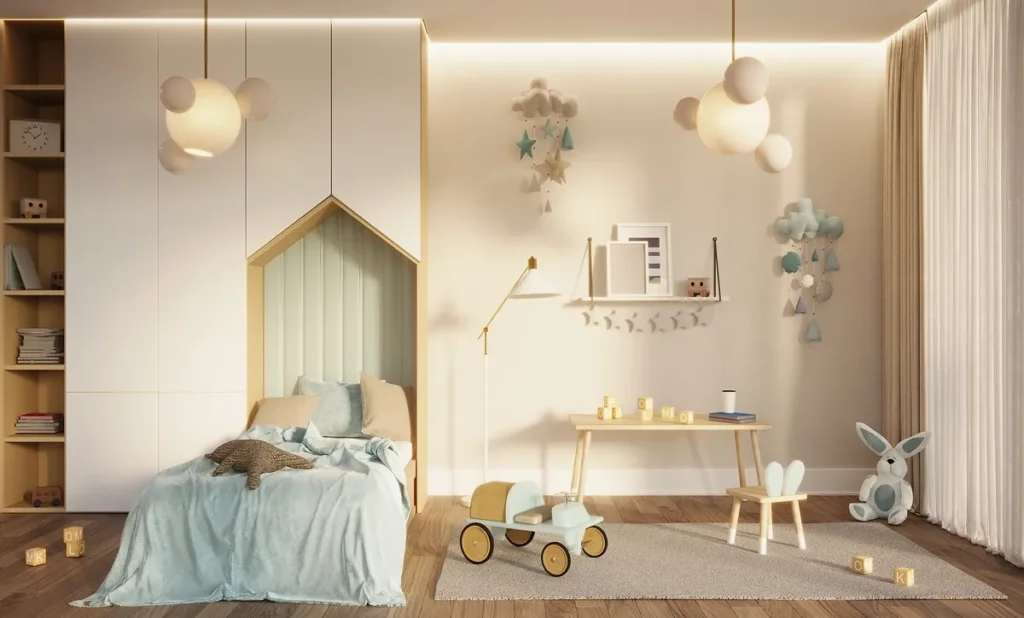
Set up the bed in a quiet, dim corner of the room. Keep it separate from the play space to create a calm area for rest. Choose soft bedding in gentle colors and skip busy prints or cartoon characters to maintain a peaceful feel.
Quiet Corner or Reading Nook
Create a cozy reading spot where your toddler can relax and unwind. A small bookshelf, soft rug, and a beanbag or cushion work perfectly. This little corner becomes a comforting retreat before naps or bedtime.
Comfort
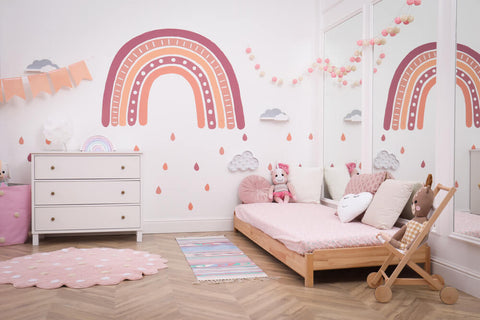
Montessori design encourages the use of natural fibers and materials. The room should be filled with natural light during the day and darkened when it’s time for naps.
Keep the temperature comfortable and cozy. Use soft rugs and warm blankets to make the space feel even more welcoming.
Mirrors, mobiles, and other gentle sensory elements will keep your child entertained while supporting free play and comfort in their environment.
Room Layout
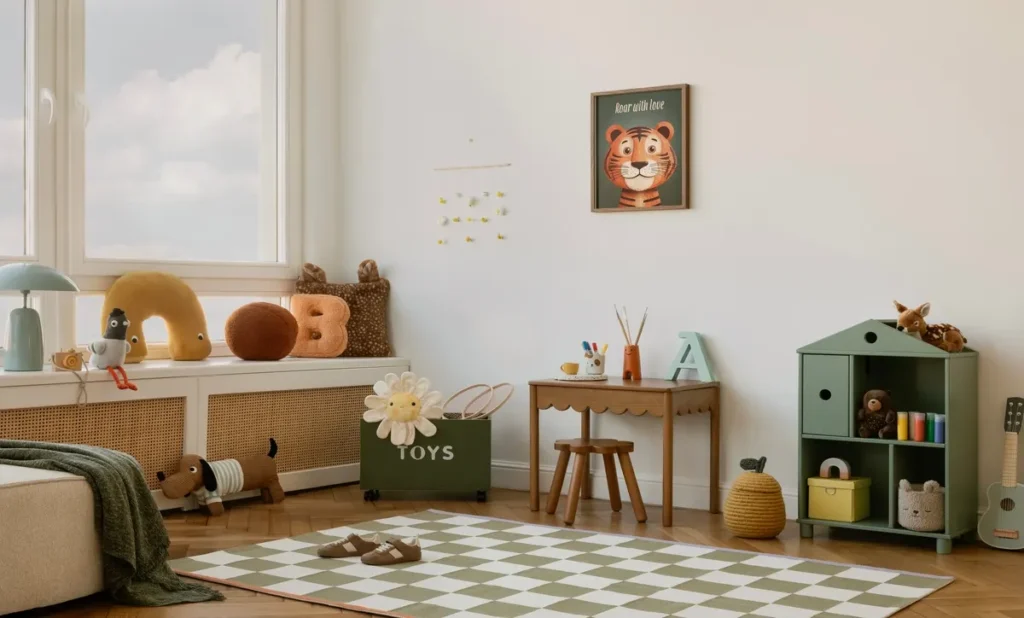
Floor Bed Instead of a Crib
A floor bed gives your little one the freedom to move and explore on their own. It helps toddlers build confidence and independence as they learn to get in and out of bed without help. Choose a low frame or even place the mattress directly on the floor. Avoid tall frames or guardrails unless they’re needed for safety.
Clear Pathways
Keep the layout open so your child can move, crawl, and play freely. Avoid clutter and make sure there’s plenty of space for walking and exploring. Place furniture along the walls to keep the middle area open. Add soft rugs to create cozy spots for crawling and sitting safely.
The Montessori House Floor Bed
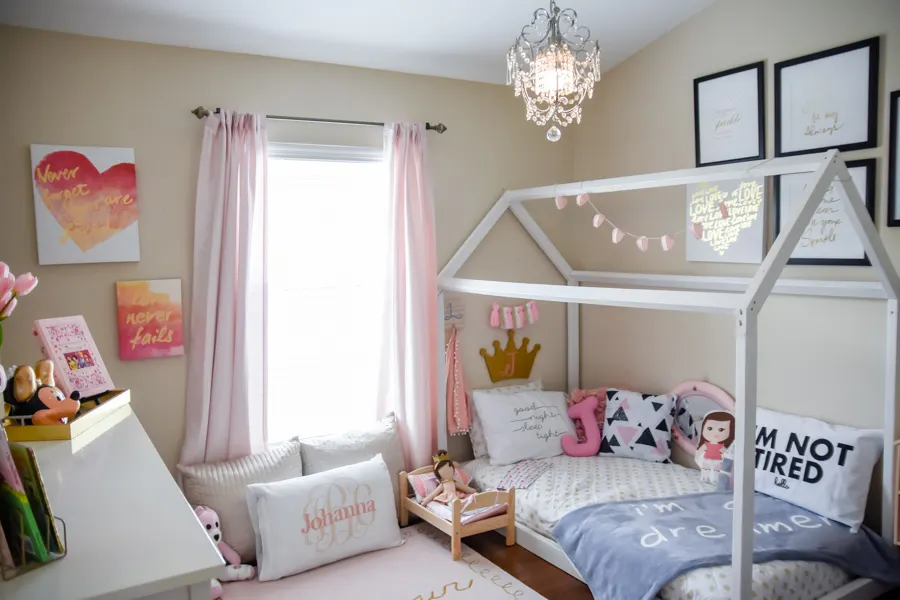
This adorable house frame bed is always a favorite among parents and kids. It works beautifully for any little girl or boy and adds a playful, cozy charm to the room. You can even get free DIY plans to build this bed yourself. It’s the perfect combination of fun and functionality for a dreamy toddler space.
Accessible Storage
Storage should be open and easy to reach so your toddler can pick up, use, and put away items independently. Low open shelves are perfect for books and toys. Baskets are great for keeping soft items organized.
Toy and Book Placement
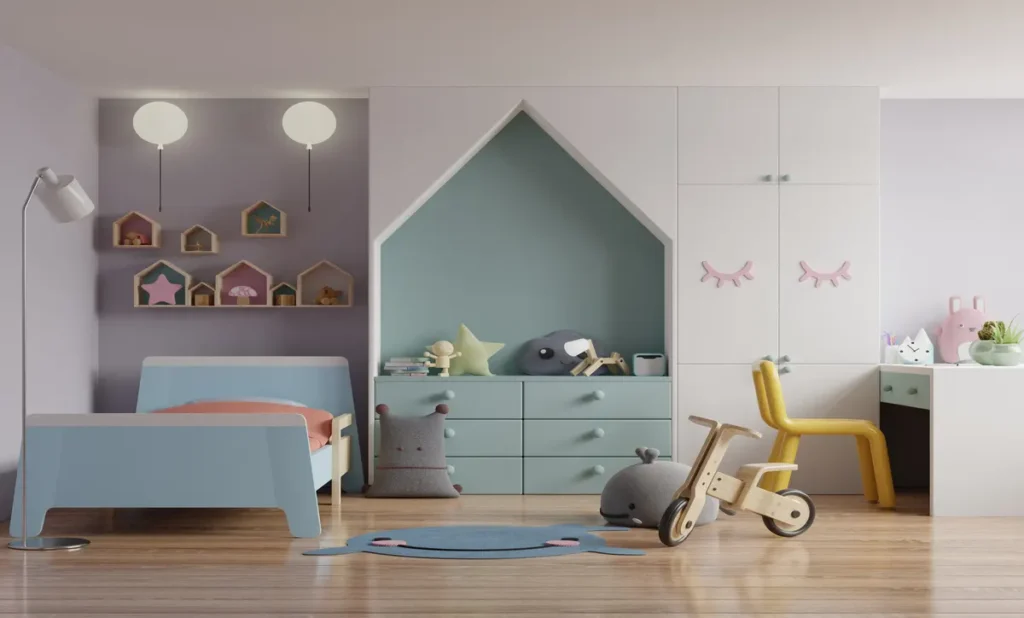
Rotate Toys Frequently
Too many toys can be overwhelming for a toddler. Keep only a few out at a time and switch them up every week. Select toys made from natural materials and skip loud or battery-powered options.
Display Books Face Forward
Books displayed with their covers facing out are more inviting for little readers. Use shallow wall shelves or low racks to show off a few favorite titles. Keep around five to eight books at a time so your toddler can focus and keep the space tidy.
Find Inspiration
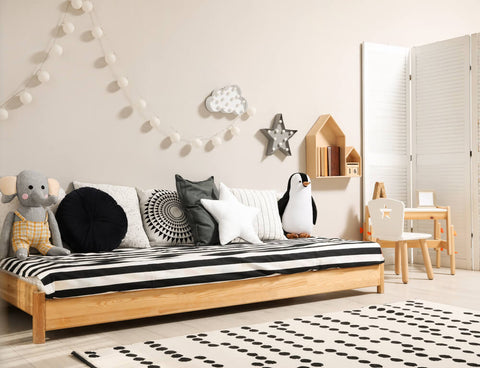
Creating a Montessori-inspired bedroom can feel overwhelming at first. The best way to begin is by looking at real examples. Every family is different, and every child’s space will reflect their unique needs.
No single setup is perfect, so take inspiration from what others have done. Explore online resources and photos to help you find ideas that fit your child’s personality and your home’s style.
Lighting and Natural Elements
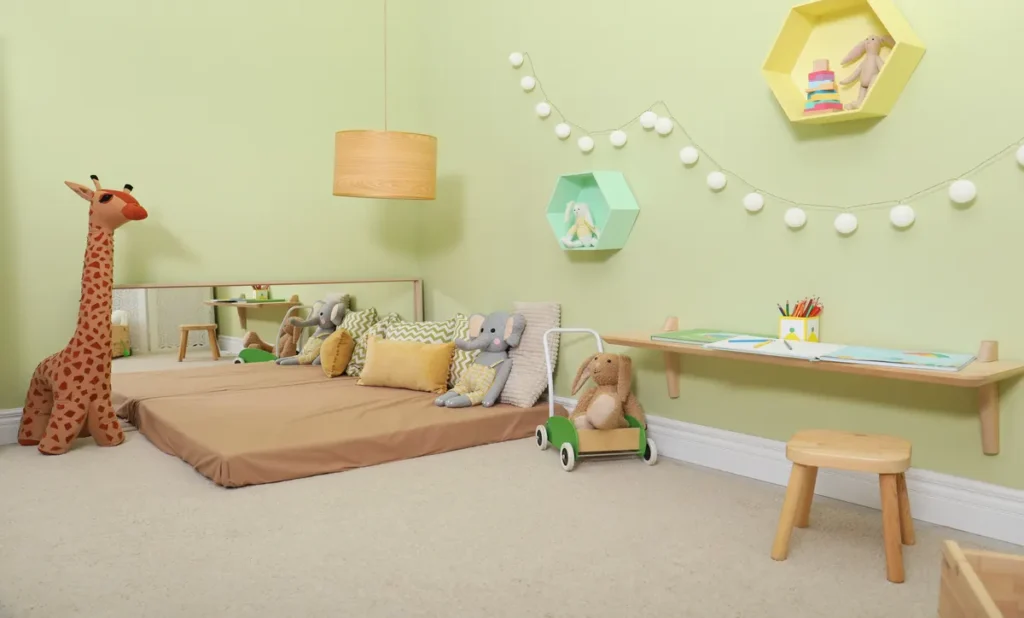
Use Soft Natural Light
Natural light helps regulate sleep and boosts mood. Keep windows free of heavy curtains during the day. Choose sheer drapes or light blinds and avoid harsh overhead lighting. Use a soft lamp in the evening for a warm glow.
Add Indoor Plants
Plants bring a touch of life and calm into the room. Pick non-toxic varieties and place them where your child can see but not easily reach. A bit of greenery helps create a soothing, sensory-rich space.
De-clutter and Simplify
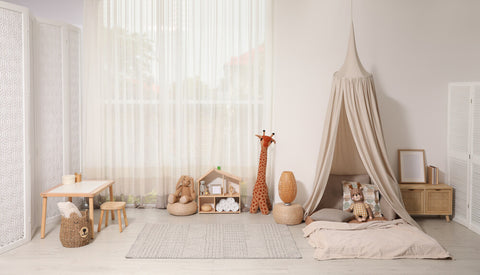
A Montessori-inspired bedroom is all about simplicity. It’s designed to be calm, clean, and free from extra toys, bulky furniture, or unnecessary clutter. This kind of space is tailored just for your child, helping them focus and feel at ease.
Think about ways to build a sense of order and independence with storage for toys, books, clothes, and personal care items. The room should stay open and organized, so your child can easily see where things belong.
Place clothing in the lower drawers or shelves so your little one can reach them and get dressed on their own.
Colors and Materials
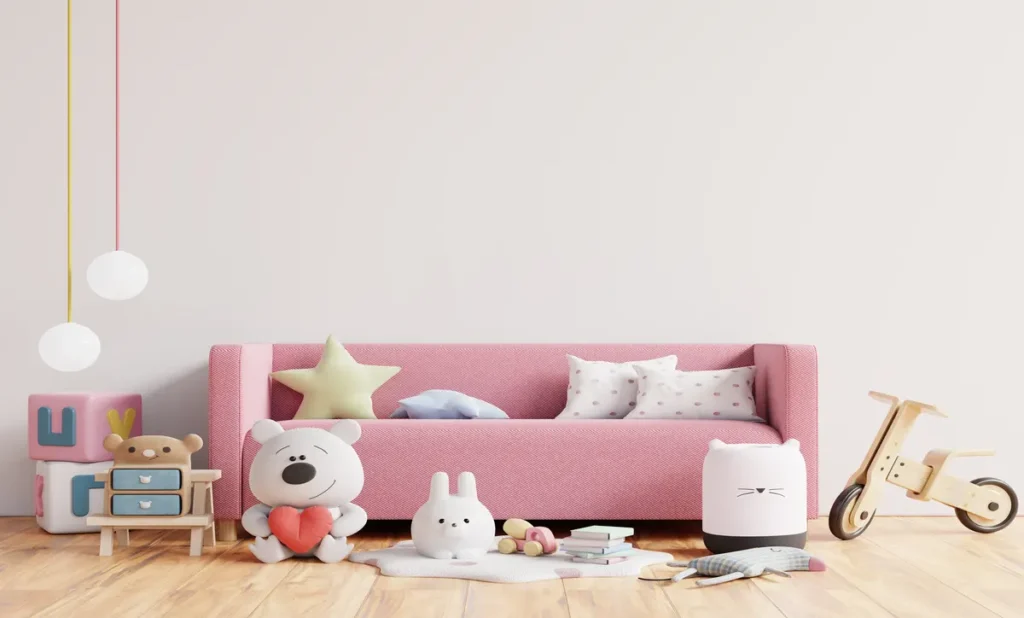
Soft Neutral Color Palette
Soft, muted tones make the room feel peaceful. Bright or neon colors can be too stimulating for toddlers. Go with shades like beige, ivory, pastel blue, or warm, earthy tones for walls, bedding, and rugs.
Natural Textures
Choose natural fabrics like cotton and linen for a cozy feel and better sleep. Wooden furniture adds warmth and durability. Avoid synthetic fabrics and glossy finishes, and pick breathable materials for bedding to keep your little one comfortable.
Montessori For Two
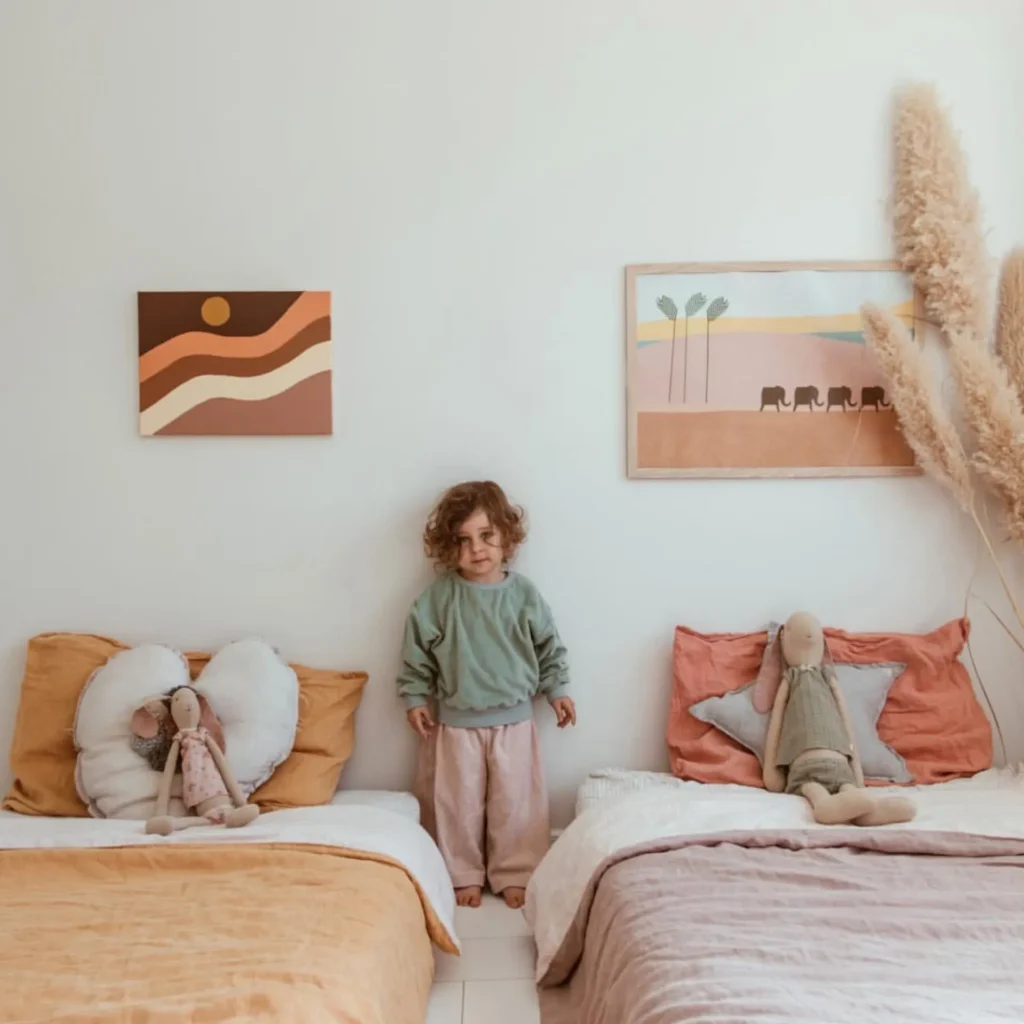
This sweet setup shows how easily siblings can share a Montessori-style bedroom. It’s simple, practical, and just as charming as it looks. Two mattresses placed directly on the floor make the perfect shared space for little ones to play and rest together comfortably.
Learning and Daily Tasks
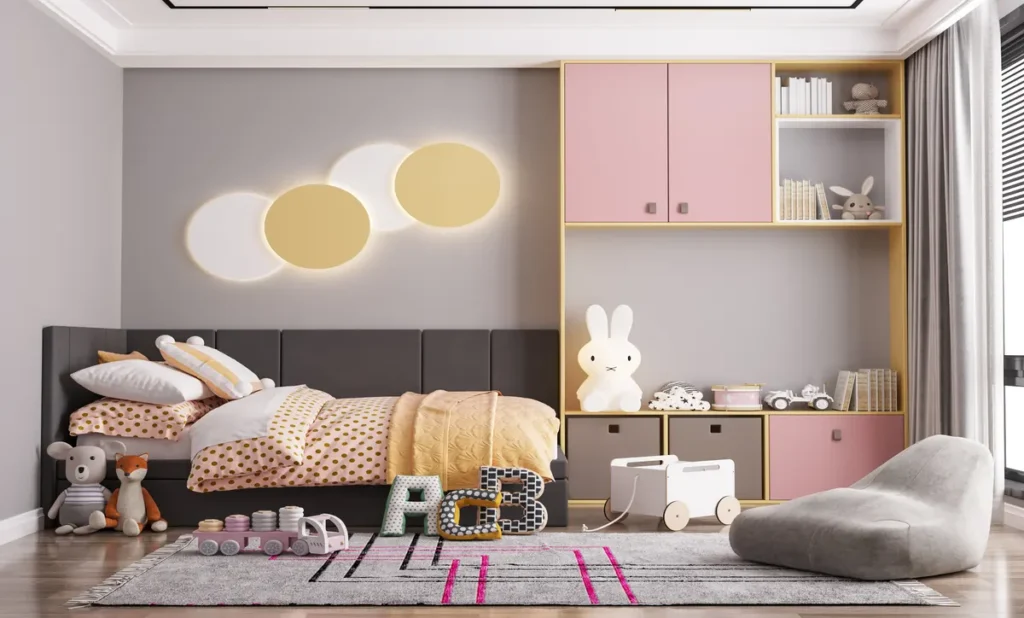
Mirror at Toddler’s Height
A mirror helps your child develop self-awareness. Place a shatterproof mirror low on the wall near the bed or play area so your toddler can watch their movements, make faces, and recognize their reflection.
Low Wardrobe and Hooks
Encourage independence by giving your toddler access to their own clothes. Choose a wardrobe that’s easy to reach and add wall hooks at shoulder height for jackets or backpacks. This simple setup builds confidence, decision-making skills, and a sense of responsibility.
Tap into Your Child’s Taste

Follow your child’s lead and pay attention to what they enjoy. As they grow, their interests and preferences become clearer, so let their personality shine in their space.
If your child is old enough, include them in decorating decisions. Let them pick a few colors, pieces of art, or accessories. Display their artwork and family photos to make the room feel like their own special place.
Safety Features

Secure Furniture to Walls
Even low furniture can tip over, so anchor bookshelves and wardrobes to the wall with brackets. Cover electrical outlets and avoid using floor lamps that could fall.
Avoid Sharp Corners
Choose furniture with rounded edges whenever possible. If needed, add corner guards for extra protection. Remove anything that’s breakable or too heavy for your toddler to handle safely.
Get Rid of the Crib
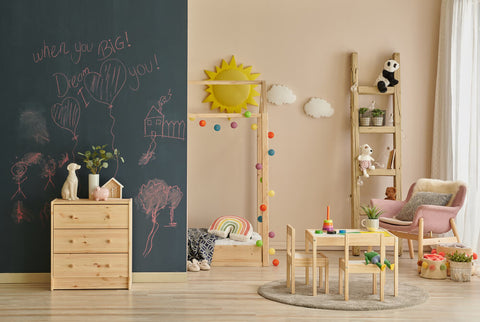
One of the biggest transitions in a Montessori bedroom is saying goodbye to the crib. Placing the mattress directly on the floor gives your child a greater sense of independence and freedom.
This idea actually comes from Maria Montessori herself, who, more than a century ago, wrote about how sleeping on the floor supports a child’s freedom of movement and confidence.
Daily Routine Support
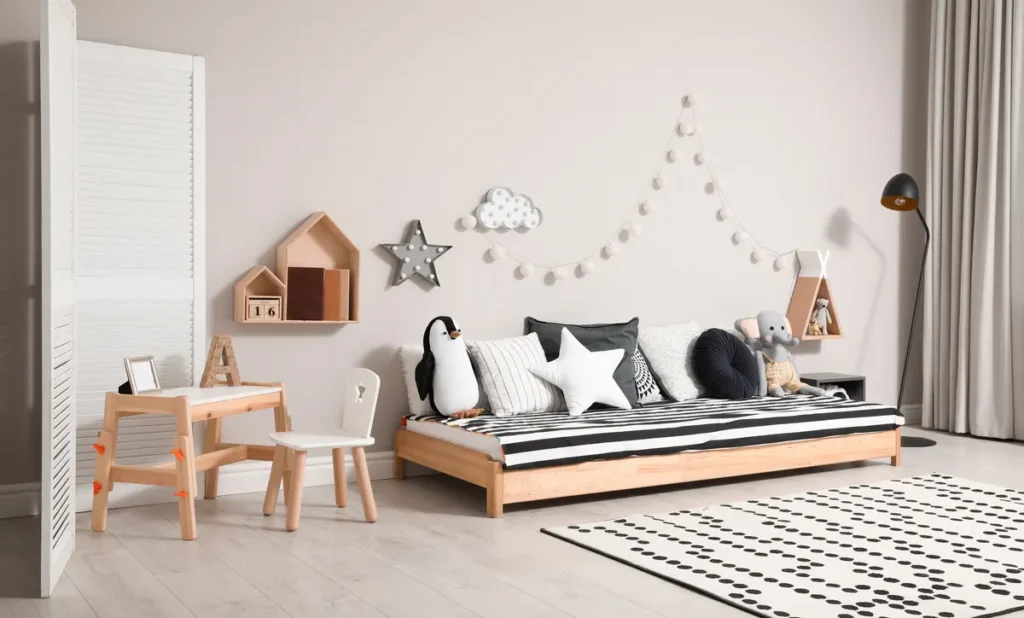
Simple Clock or Visual Schedule
A basic toddler clock with pictures or colors can help your child understand daily routines. You can also use a visual chart with simple morning and evening tasks. This encourages structure and helps build a sense of time.
Basket for Dirty Clothes
Keep a small laundry basket near the wardrobe and show your toddler how to place their clothes in it. This simple habit supports independence and a feeling of contribution to daily routines.
The Montessori Floor Bed
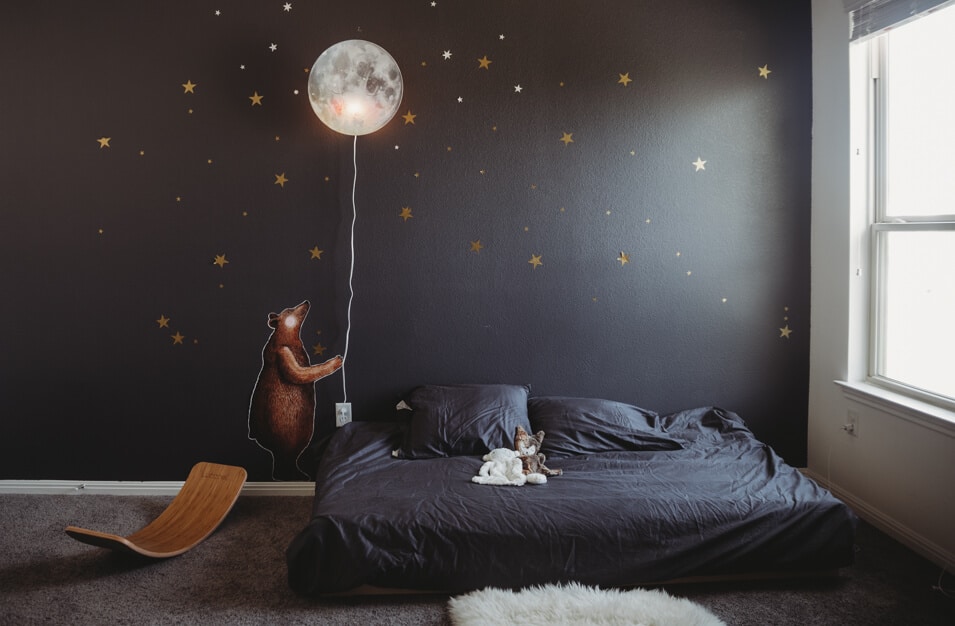
This beautiful space is the perfect spot for your Montessori toddler to unwind and feel at ease. The darker tones create a peaceful mood, while the simplicity of the room captures exactly what a Montessori bedroom is meant to be.
It’s calm, minimal, and thoughtfully designed to support your child’s independence and relaxation.
Beauty and Décor
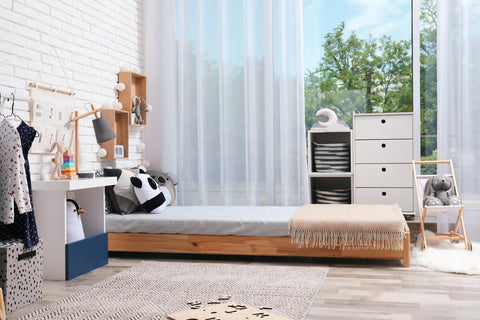
When planning décor, consider what you and your child both love. Think about colors, textures, rugs, bedding, artwork, and furniture that make the room calm and inviting. Don’t hesitate to decorate and make it feel beautiful.
You can even use your child’s own artwork. It adds personality to the room and saves money. Adding a small table and chairs creates a workspace where your toddler can imitate you while you work or create.
Safety
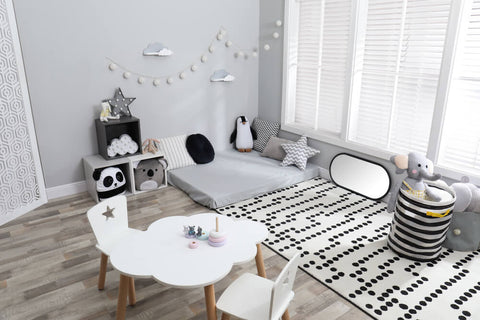
Safety comes first in a Montessori-style bedroom because the goal is for your child to be able to play and sleep independently.
Choose toys and materials that match your child’s age. Avoid anything with small or detachable parts that could pose a risk.
If needed, use a door gate or other safety tools to keep the space secure. Always check for potential hazards like heaters, unstable furniture, or shelving that could fall.
DIY Montessori Floor Bed
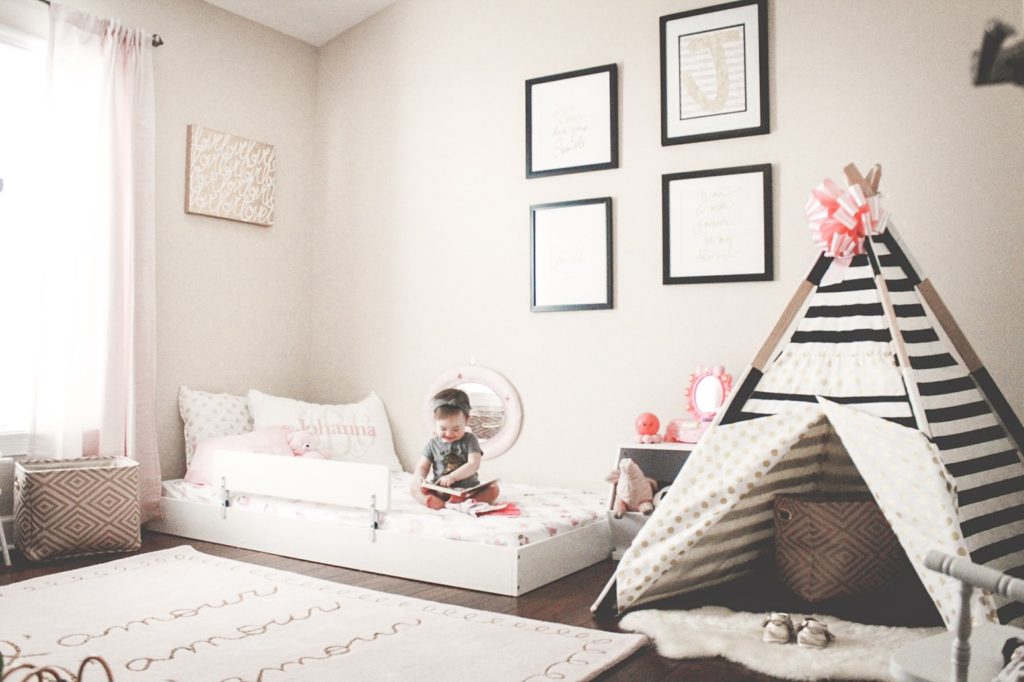
If you enjoy getting creative, you can design your own Montessori floor bed frame. It’s an easy and rewarding DIY project that gives your toddler the independence they need while fitting your personal style.
You can check out the “How to Make a Montessori Floor Bed” post for helpful steps and inspiration.
Furniture Choices
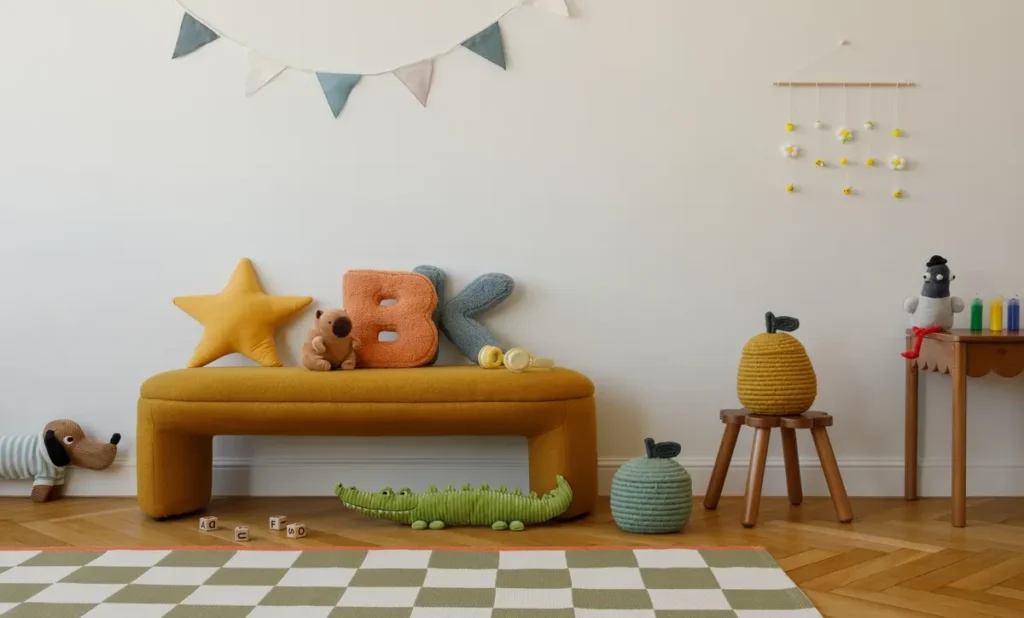
Child-Sized Furniture
Small, child-friendly furniture makes daily activities easier and encourages independence. A little chair, a low table, or a soft pouf can help with playtime and other simple tasks. Choose natural materials like wood for a warm and sturdy feel. Plastic can break easily and often feels cold.