The Best 13 Finger Foods for Babies
Watching your little one start to feed themselves is both exciting and a little nerve-racking. Between the mess, allergies, and those early choking worries, it’s natural to feel tense as you hover near the high chair.
Still, this milestone is such an important step, and with the right foods, it can be both safe and fun. The key is choosing soft, easy-to-handle bites that help your baby explore textures while learning to self-feed.
When Can Babies Start Eating Finger Foods?
There isn’t one set age for when to start. According to experts, the best sign is your baby’s interest. If your little one reaches for the spoon, tries to grab your food, or gets frustrated when you eat without sharing, that’s a strong clue they’re ready to try it out. Babies naturally want to feed themselves because it’s part of their growth and independence.
Another good sign is if your baby can sit up on their own. Sitting steadily in a high chair shows they have enough control to safely manage small bites.
Some parents wait until their baby develops a pincer grasp, that little thumb-and-forefinger pinch, but it’s not required. Most babies start out using their whole hand to grab and explore, and that’s perfectly fine.
Don’t wait for teeth either. Babies’ gums are surprisingly strong and can mash soft foods easily. If your little one has ever chomped your finger while teething, you already know how powerful those gums are.
Finger Food Safety Tips
When starting out, always go for soft foods cut into small pieces that can dissolve easily. Think of foods that don’t need much chewing and aren’t sticky or tough.
As your baby gets more confident, you can introduce new textures and slightly larger pieces. Around their first birthday, most little ones can manage small bites of fruits and veggies that break apart easily.
Stay away from anything that’s too firm, round, or sticky. Things like raw carrots, grapes, popcorn, nuts, or chunks of meat and cheese can be choking hazards.
Also, skip the salt and sugar. Baby food doesn’t need seasoning the way adult food does, and it’s best to keep their meals simple and natural. You can always season your own portion separately.
How to Introduce New Finger Foods
At first, breast milk or formula will still be your baby’s main nutrition, followed by purees. You can start offering small bits of soft food on their tray while spoon-feeding, letting them experiment at their own pace.
Pay attention to your baby’s cues. If they turn away or fuss, take a break and try again another time. Some babies need several tries before they warm up to new textures or flavors, so keep offering gently without pressure.
A good way to transition is to serve thicker purees or mashed foods with a bit of texture, alternating between smooth and lumpy bites.
Be prepared for plenty of mess. Laying down a wipeable mat or an old tablecloth under the high chair helps because the food will end up everywhere before it finally lands in their mouth.
Always stay close while your baby eats and watch for any signs of choking. It can feel stressful at first, but learning to self-feed builds independence, coordination, and confidence that will stick with them long after the high chair days.
Best Finger Foods for Baby
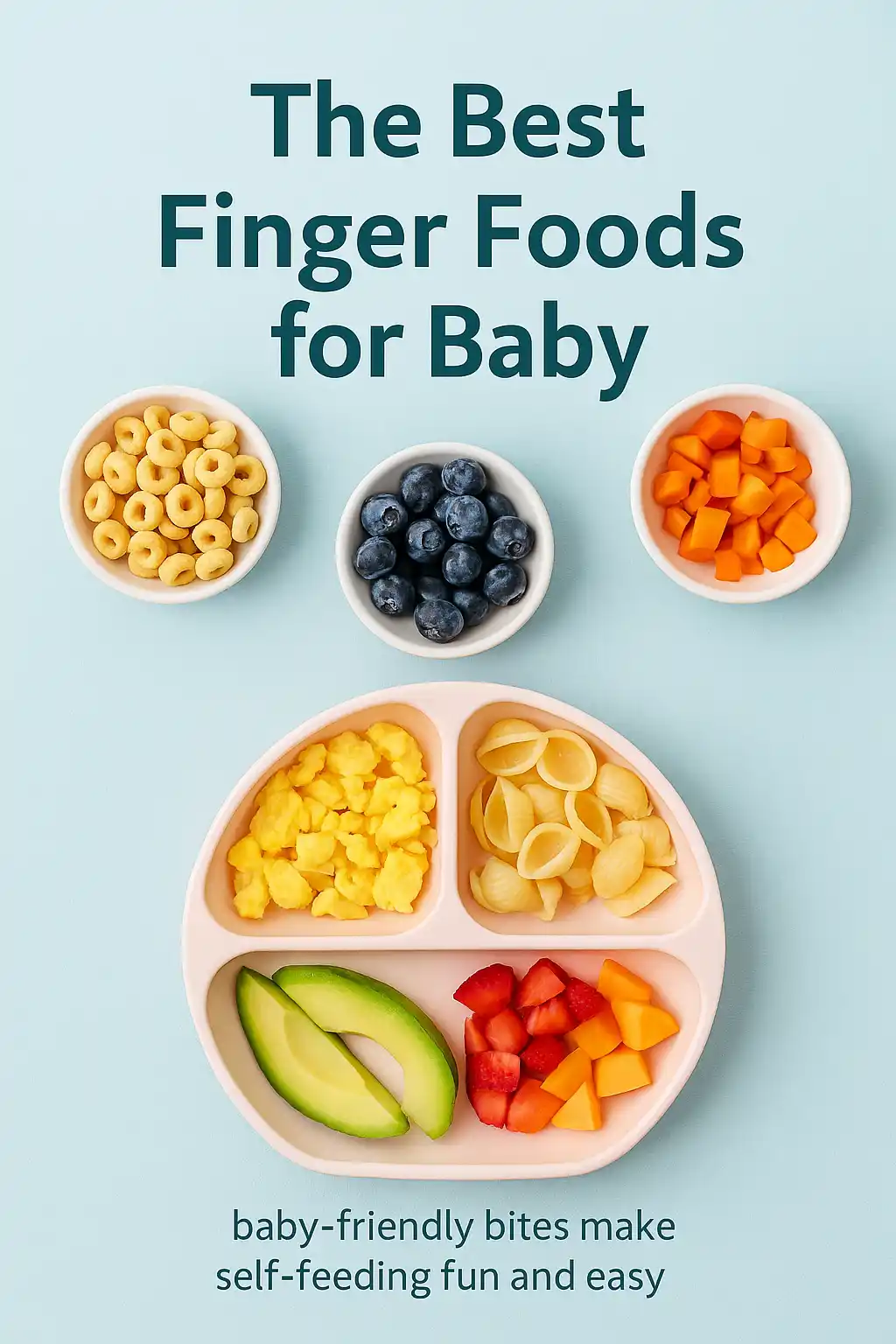
If you’re looking for baby finger food ideas, think about options that are soft, small, and easy to gum. Here are some of the best choices to help your little one get started, even if they don’t have teeth yet. These healthy options are great for both 6-month-olds and 1-year-olds, and as your baby grows, you can begin to offer slightly larger pieces they can bite off on their own. Stick with these simple foods to help your baby develop healthy eating habits from the start.
Puffs and Dry Cereal
Puffs and O-shaped dry cereal are some of the most popular first finger foods for a reason. They let your baby practice picking up small pieces one at a time, which helps develop the pincer grasp. These snacks also mix easily with saliva, making them simple for babies to manage in their mouths without the risk of choking.
Teething Biscuits and Lightly Toasted Bread
Teething biscuits and tiny pieces of lightly toasted bread are another good early choice. They soften quickly once in the mouth and are easy to chew. Some breads can become sticky, so to avoid that, lightly toast and cut them into very small bites. As your baby gets older, around 9 to 12 months, you can offer slightly larger pieces or top them with mashed banana, avocado, or a thin layer of hummus or peanut butter.
Scrambled Eggs
Doctors once suggested waiting to introduce eggs, but the American Academy of Pediatrics now encourages early exposure to foods that might cause allergies. Scrambled eggs are nutritious and an ideal early finger food. Just make sure to cook them all the way through, cut into small pieces, and skip the salt.
Soft Fruit
Very ripe fruits are naturally soft, making them great beginner finger foods. Ripe banana, peach, watermelon without seeds, raspberries, blueberries, and cantaloupe cut into small pieces are all gentle options for babies learning to self-feed.
Avocado
Avocado is packed with omega-3 fatty acids that help support brain development. It’s often one of the first foods babies try, even before they have teeth. It’s creamy, nutritious, and easy to mash, though it can get messy fast. The adorable avocado-covered baby photos are just a bonus.
Pasta
When cooking pasta for your baby, make it softer than usual by boiling it a little longer. Start with small shapes like orzo or mini shells, or cut larger ones like fusilli or penne into small bites. In the beginning, serve pasta plain, then as your baby gets used to new flavors, you can add a bit of butter, olive oil, or low-sodium tomato sauce.
Tofu
Tofu is a gentle, plant-based protein that’s perfect for babies. Choose firm tofu because it holds its shape better, while still being soft enough to chew easily. Very soft or silken tofu may fall apart and frustrate your little one.
Cooked Vegetables
Even though it will be a while before your baby can enjoy crunchy raw veggies, cooked vegetables make wonderful finger foods. Steam or roast them until soft, then cut into small pieces. Sweet potato, carrot, broccoli, cauliflower, and yellow beets are all great choices. As your baby grows, you can move on to soft steamed carrot sticks or peeled, roasted sweet potato wedges.
Cheese
If your baby doesn’t have a dairy allergy, shredded or small cubes of pasteurized cheese can be offered as early as 6 months. Go for mild varieties that are soft but not sticky, like Monterey Jack or cheddar. These are great sources of calcium and protein for your growing baby.
Beans
Beans are a fantastic source of plant-based protein and iron. You can use canned, low-sodium beans for convenience or cook dry beans at home. When serving beans for the first time, gently press or mash them between your fingers to make them easier to chew and swallow.
Homemade Muffins
Store-bought muffins are often loaded with sugar, but homemade ones can be a healthy and delicious option. Use whole wheat flour, natural sweeteners like applesauce, and add ingredients such as mashed banana or grated zucchini. Bake in mini muffin tins or regular tins and break them into small pieces for your baby to enjoy.
Meat
Once your baby has mastered soft foods, small bites of diced chicken or ground beef can be a good next step. Make sure the meat is cooked all the way through and cut into tiny pieces that are easy to manage.
Fish
Fish is another healthy option that can be introduced before your baby turns one. Choose low-mercury varieties such as flounder, cod, or salmon. Always cook the fish thoroughly and double-check for any small bones before serving.
Important Reminders for Parents
As you begin offering new foods, remember that this process takes time and patience. Babies will still rely on breast milk or formula as their main source of nutrition during the early stages. Finger foods are meant to complement, not replace, those feedings at first. Let your baby explore and make a mess, as this is how they learn coordination and self-feeding skills.
Always keep an eye on your baby while they eat. Never leave them unattended with food, and watch closely for any signs of choking. You can reduce the risk by cutting foods into very small, soft pieces and choosing textures that dissolve easily.
Even though it may feel easier to hold off on finger foods, starting early helps your baby build independence and confidence. It also supports fine motor development and strengthens chewing patterns.
If your baby isn’t immediately interested, that’s perfectly normal. Keep trying gently and offer new foods again later. Some babies need multiple introductions before they start to enjoy a new texture or flavor.
The transition to finger foods can be messy, but it’s one of the most rewarding milestones to watch. Encourage your baby to play, taste, and enjoy the experience. Every bite is a step toward healthy eating habits that will last well beyond their first year.